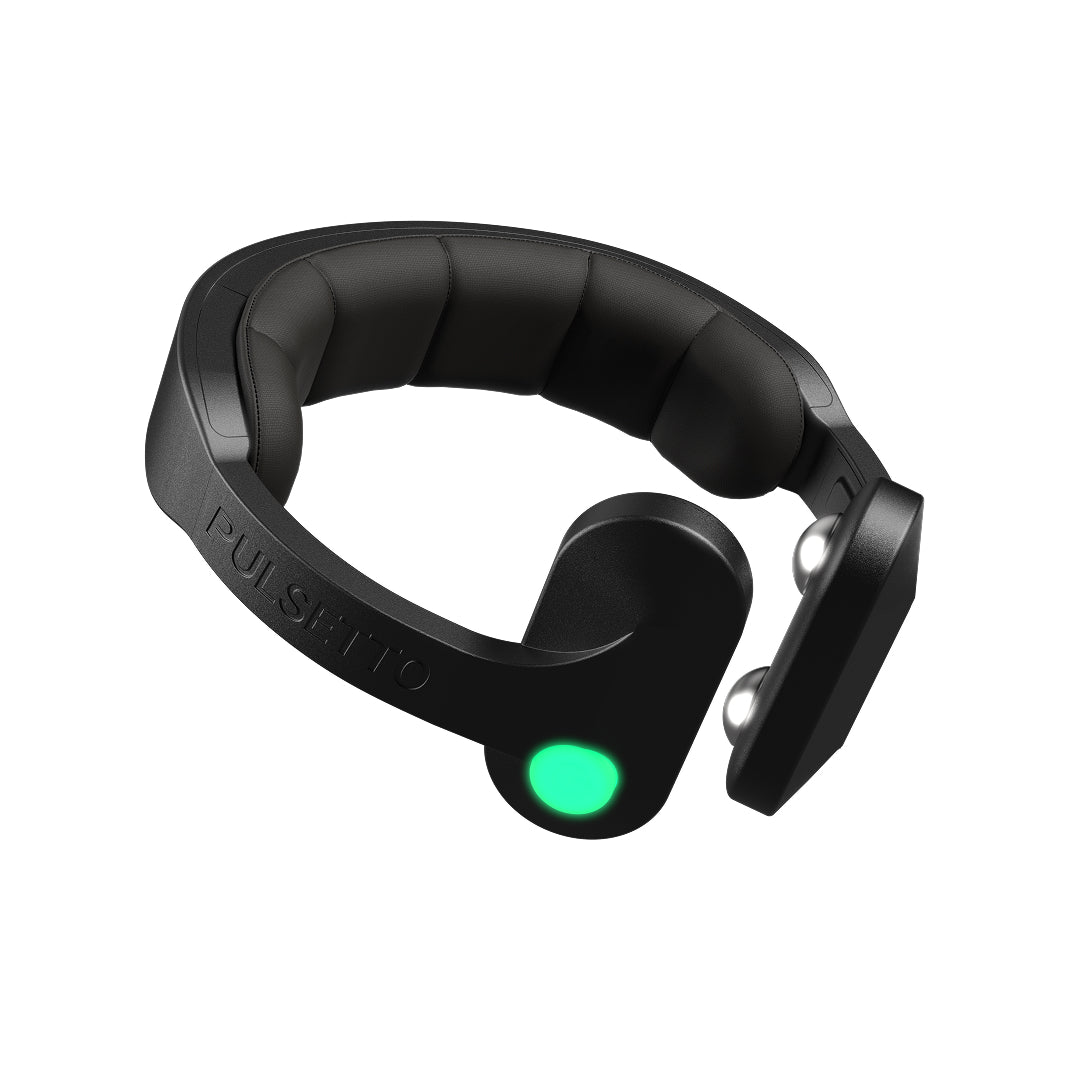
Pulsetto FIT X
Cervical · bilateral · hands-free
$399 observed
Devices, pricing, scientific evidence, technology, regulation and consumer search demand — audited with a conservative evidence standard designed to separate what manufacturers claim from what independent sources can verify.
The consumer VNS market has moved beyond a single device format. In 2026, consumers can choose between cervical neck stimulators and auricular ear-based systems, with meaningful differences in price, session design, evidence maturity, recurring costs and regulatory positioning.
NDL's audit identified 11 direct-electrical consumer models in its current model-level census. Because several brands sell multiple SKUs, the report also uses a seven-platform denominator to avoid allowing multi-model product lines to distort evidence coverage.
Four signals summarize the current consumer VNS market: a roughly even split between neck and ear stimulation, a mid-$300s observed device price, uneven device-specific evidence, and rapidly rising branded search interest around Pulsetto.


The core denominator includes products that are non-invasive, electrically stimulate an anatomical vagus-nerve target, and are accessible to consumers or patients in 2026. NDL separates direct electrical VNS from non-electrical products marketed around vagal modulation and from adjacent nervous-system wearables.
| Class | Definition | Examples | Core denominator? |
|---|---|---|---|
| A | Direct electrical non-invasive VNS | Pulsetto, Nurosym/NuroPod, Truvaga, Xen, Vagustim, ZenoWell, VeRelief | Yes |
| B | Vagus-targeting but non-electrical | Sensate | No — reported separately |
| C | Adjacent nervous-system devices | Apollo Neuro and similar products | No |
| Clinical benchmark | Regulated clinical VNS used as an evidence/regulatory comparator | gammaCore Sapphire | No |
A recent peer-reviewed review independently describes an OTC VNS market including Nurosym/NuroPod, Xen, ZenoWell, tVNS products, Truvaga, Pulsetto and VeRelief, while distinguishing Sensate's infrasonic approach.
Product visuals are locally hosted WebP assets where NDL already has verified product imagery. Where a permission-cleared product image is not yet in the NDL asset library, the card links directly to the official manufacturer source rather than presenting a webpage screenshot as product photography. Because product pages and promotions change, the report records access dates rather than treating any current page as permanent evidence.
Cervical · bilateral · hands-free
$399 observed
Cervical · bilateral · hands-free
$269–$296 observed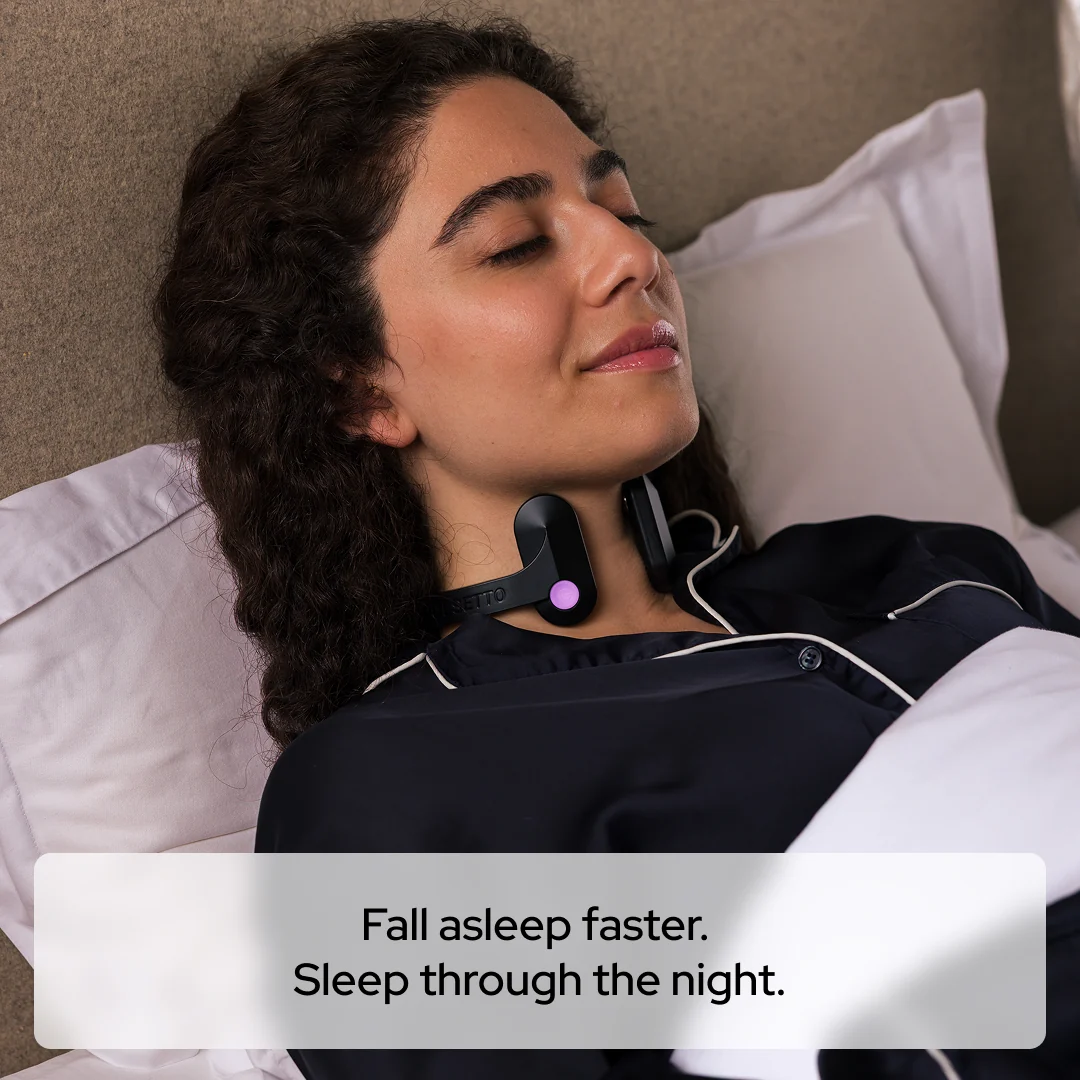
Cervical · bilateral · hands-free
$224–$269 observedAuricular · ear electrode
€700 current official listingCervical · handheld
$499Cervical · handheld · 350 sessions
$325Auricular · left ear
$409 current official listingAuricular · left ear
$239Among the audited models with USD price observations, the median observed device price was $354. The range in the current dataset ran from $224 for Pulsetto Lite to $499 for Truvaga Plus. Nurosym is excluded from this USD median because its current official listing is denominated in euros.

| Device | Site | Observed price | Recurring-cost note |
|---|---|---|---|
| Pulsetto Lite | Cervical | $224 dataset snapshot | Core app usable without mandatory premium; gel required |
| Pulsetto FIT | Cervical | $269 dataset snapshot | Optional premium app; gel required |
| Pulsetto FIT X | Cervical | $399 dataset snapshot | New-generation Pulsetto platform; gel required |
| Truvaga 350 | Cervical | $325 | Finite 350-session device; conductive gel included initially |
| Truvaga Plus | Cervical | $499 | Rechargeable/unlimited-session positioning; electrode spray |
| Nurosym | Auricular | €700 / £599 regional official listing | No monthly fee; no gel required |
| Neuvana Xen | Auricular | $359 dataset snapshot | Recurring cost not fully verified |
| Vagustim V2 | Auricular | $349 dataset snapshot | Optional premium in some bundles |
| ZenoWell Vita Mini | Auricular | $239 | No mandatory app subscription identified |
| VeRelief Prime | Cervical | $399 dataset snapshot | Optional plan/consumable structure should be shown separately |
NDL does not count a manufacturer bibliography as proof that a specific commercial device has been clinically validated. A study must be mapped to the exact device or technology platform, and manufacturer-posted research does not enter the peer-reviewed numerator until a journal publication is independently located.

| Platform | Peer-reviewed device/platform human evidence | Randomized | Credible sham | NDL treatment |
|---|---|---|---|---|
| Pulsetto | Verified | Yes | No equivalent stimulation sham located in the audited acute physiology study | Device/platform studied; clinical efficacy must not be inferred from study existence alone |
| Nurosym | Verified | Yes | Yes | Multiple device-specific human studies located |
| Neuvana Xen | Verified | Yes | Yes | Exact-device human study located |
| Vagustim | Verified | Yes | Yes | Includes a large sham-controlled trial whose primary endpoint was not met |
| Truvaga | Not yet verified in peer-reviewed exact-device literature | Not verified | Not verified | Manufacturer/consumer research kept separate; gammaCore evidence is not transferred to Truvaga |
| ZenoWell | Not yet independently mapped to exact current models | Not verified | Not verified | Manufacturer research claims remain evidence-gap items until mapped |
| VeRelief | Peer-reviewed publication not located in current audit | Manufacturer-posted study exists | Manufacturer-posted sham study exists | Visible, but excluded from peer-reviewed numerator |
Google Trends adds a different layer to the report: consumer attention. It does not report absolute search volume. Its index is normalized to time and geography, so the correct interpretation is relative interest and change, not raw query counts.


| Signal | Observed Trends result | How NDL interprets it |
|---|---|---|
| “pulsetto” — trailing 12 months | +170% vs prior year in the supplied Trends capture | Strong year-over-year relative interest growth; not a claim of +170% absolute search volume |
| “pulsetto” — trailing 3 months | +70% vs same period one year earlier | Recent interest remains materially above the comparable 2025 period |
| “pulsetto fit” — trailing 12 months | +400% related-query growth in the supplied capture | Supports treating FIT/FIT X as a dedicated branded-demand cluster |
| English-speaking relative-interest markets | Canada, Australia and United States appear prominently | Supports an English-language international SEO strategy rather than a US-only content model |
Pulsetto illustrates several forces reshaping consumer VNS at once: hands-free cervical stimulation, an app-led experience, multiple price tiers, rapid product iteration and rising branded search interest. In September 2026, Pulsetto launched FIT X as the next generation of its platform, while FIT and Lite remained lower-cost entry points.
This section is intentionally deeper than a simple product listing, but it does not change NDL's evidence rules. Manufacturer claims, NDL observations and peer-reviewed findings remain separately labeled.
Research → Pulsetto Review → Hands-On → vs Nurosym / vs Truvaga / vs Sensate → Lite vs FIT vs FIT X → affiliate CTA
| Model | Role in lineup | Observed price | Editorial intent |
|---|---|---|---|
| Lite | Entry-level Pulsetto | $224 dataset snapshot | Budget / first-time buyer |
| FIT | Comfort/battery upgrade | $269 dataset snapshot | Core branded BOFU page |
| FIT X | Current-generation / adaptive platform | $399 dataset snapshot | New-product and model-comparison demand |
Move from market-level data to hands-on testing, pricing, complaints and direct device comparisons before choosing a model.
FDA medical-device status, CE medical-device conformity, FCC compliance and RoHS are not interchangeable. NDL therefore does not create a combined “certified” score. Truvaga's own site describes its products as general wellness products not evaluated by the FDA, while gammaCore is treated separately as a regulated clinical benchmark. Nurosym is positioned by its manufacturer as a CE-certified medical device.
NDL maintains both model-level and manufacturer/platform-level counts. Every percentage states its denominator. Direct electrical VNS is separated from non-electrical and adjacent nervous-system devices.
List price, observed price, currency and access date are stored separately. Promotions are snapshots. Financing is not treated as a subscription.
Manufacturer evidence claims and independently verified peer-reviewed evidence are separate fields. Each study is audited for device specificity, randomization, sham/control quality, sample size, conflicts and outcome status.
Trials remain in the dataset when their primary endpoint is not met. This reduces cherry-picking and prevents “has research” from becoming an endorsement.
Base Year 1 and three-year cost include the observed device price plus mandatory recurring subscription and consumable costs. Optional premium services are excluded from the base metric.
Google Trends is treated as normalized relative-interest data, not absolute volume. Query type, geography, period and access date must accompany any published statistic.
This is a living market audit, not a clinical guideline. Device availability, prices, promotions, app plans, product names and regulatory positioning can change. Search-interest values are normalized. Evidence counts depend on the report's inclusion rules and should not be interpreted as proof of efficacy, superiority or safety for an individual user. Medical decisions should be made with a qualified clinician.
Suggested citation: Neuro Device Lab. Consumer Vagus Nerve Stimulation Market Report 2026: Devices, Pricing, Scientific Evidence, Technology & Search Demand. September 21, 2026.