
The Category Test: Are These Actually Competing Devices?
Commercially, yes: shoppers compare Pulsetto and Sensate because both are sold in the broader nervous-system and vagus-wellness space. Mechanistically, however, they are different products.
If your shopping requirement is “I want electrical vagus nerve stimulation,” the comparison becomes much easier.
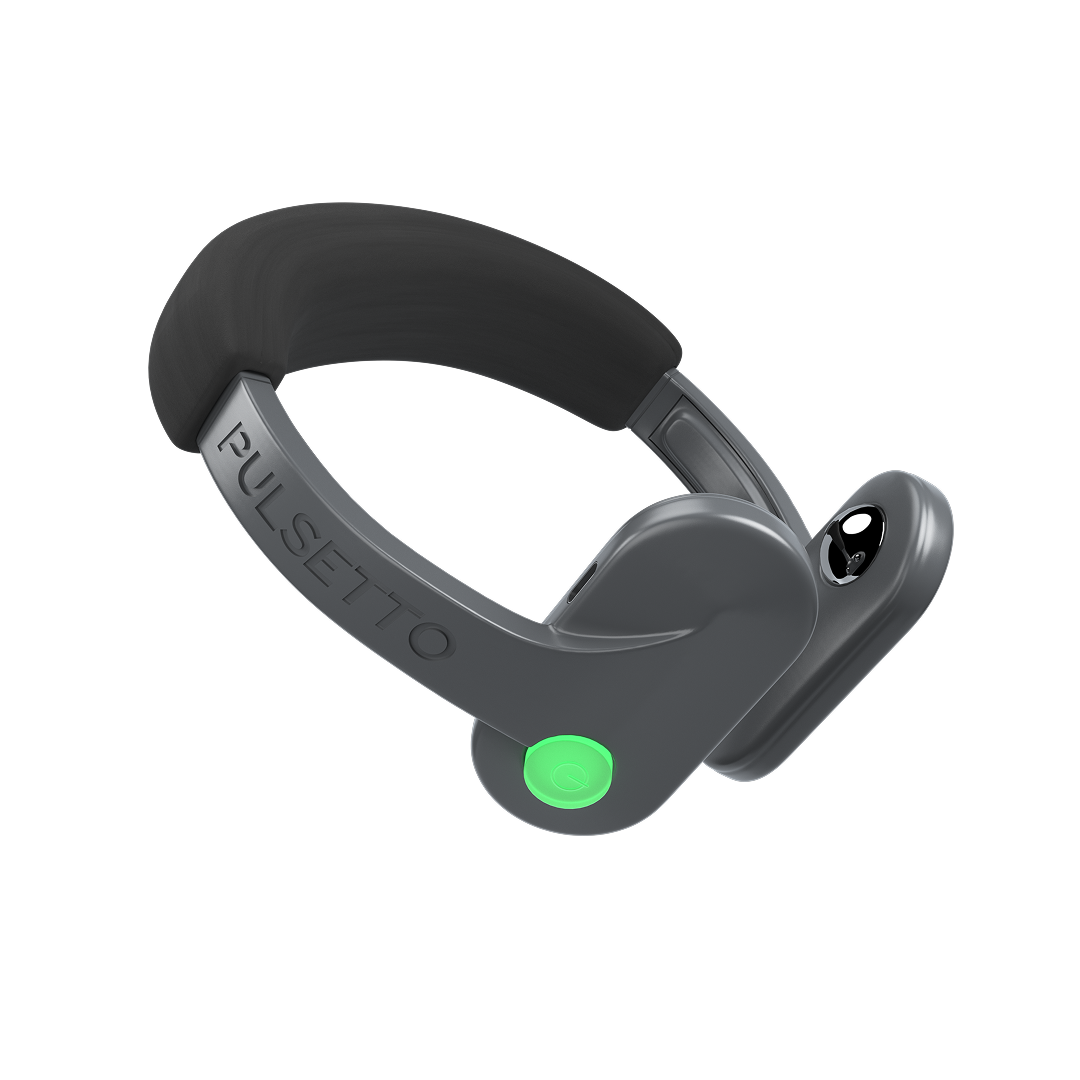
Pulsetto’s own instructions require conductive gel on the neck, placement around the cervical area and adjustment of electrical intensity until the user feels mild tingling. Sensate’s documentation describes low-frequency near-infrasound delivered to the sternum through bone conduction, synchronized with audio soundscapes.
Electrical Stimulation vs Somacoustic Relaxation
Electrical cervical stimulation
The device sits around the neck. Conductive gel helps electrode contact. The user controls intensity through the app and should feel a mild tingling sensation during use.
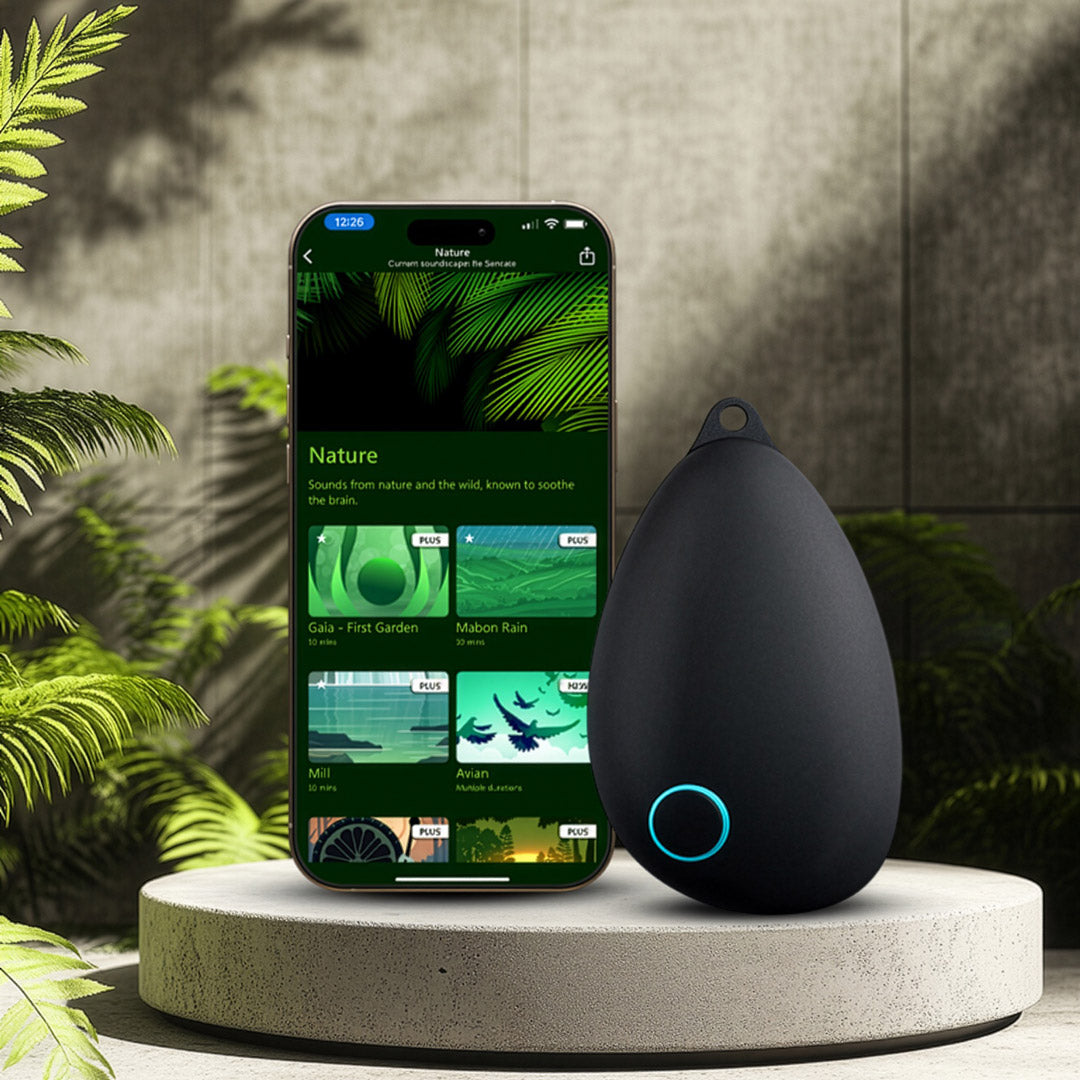
Near-infrasound + soundscape
Sensate rests on the sternum and synchronizes low-frequency vibration through the chest with audio. Its own help center describes the experience as similar to the resonance of chanting.
This is also why “which one feels better?” and “which one is closer to electrical VNS?” can have different answers.
What Are You Actually Buying?
With Pulsetto, you are buying a consumer wellness device designed to deliver non-invasive electrical stimulation at the neck. The routine is more technical: gel, placement, app pairing, program, intensity and cleanup.
With Sensate, you are buying an app-guided relaxation experience built around chest vibration and sound. You place the device on your sternum, use headphones, choose a session and let the synchronized vibration/audio create the experience.

Jessie Won actually used Pulsetto
This is what the neck-worn format looks like on a real user.
Neuro Device Lab contributor Jessie Won personally used Pulsetto and recommends it. Her hands-on page documents the real neck-worn format and complements this research-driven comparison.
Jessie has not been represented as a Sensate tester, and her personal recommendation is not clinical evidence.
Read Jessie’s Hands-On Experience →The 30-Day Reality Check: Which Routine Would You Keep?
Mechanism matters, but adherence matters too. The products ask for very different rituals.
More setup, shorter session
Apply gel, position the neckband, connect through the app, choose a program, adjust intensity, run the session and clean the gel afterward. Pulsetto describes sessions as lasting a few minutes depending on the program.
Less technical, more intentional
Place Sensate on the sternum, use headphones, open the app and choose a soundscape. Sensate recommends at least 10 minutes daily; its current site offers sessions from 10 to 30 minutes.
Pulsetto asks for more preparation around a shorter electrical session. Sensate asks you to dedicate more time to an immersive relaxation session.
Which One Feels Better?
This is where Sensate has a genuine advantage for many shoppers. Its entire experience is designed to feel pleasant: low-frequency vibration, audio and a deliberate period of rest. Independent Wareable testers described Sensate as the stronger option for immediate calm and relaxation.
Pulsetto feels more like a stimulation device. Its own instructions tell users to expect mild tingling. Independent testers have described the sensation as unusual and, for some people, uncomfortable at first.
Which Has the Better Scientific Case?
This question needs more precision than most comparison pages give it. There are at least three different evidence questions: evidence for vagus nerve stimulation as a field, evidence for a stimulation method/location, and evidence for the exact branded product being sold.
Sensate publishes and cites research around its own approach, including a small pilot study. Independent editorial analysis has noted important limitations in that work, including small sample size, short duration and reliance on self-reported outcomes. Sensate’s commercial site also publishes outcome claims from its research; we treat those as manufacturer-reported findings rather than independent guarantees.
Pulsetto’s mechanism sits closer to the electrical VNS category shoppers typically mean when searching for a “vagus nerve stimulator.” That does not mean every result from the broader VNS literature can be transferred directly to Pulsetto. Device-specific evidence should be judged on its own design, sample and publication status.
Price & True Ownership Value
Prices and promotions change often enough that we do not want a temporary sale price to become a stale fact in this article. Instead, compare the shape of ownership.
Pulsetto requires conductive gel and offers optional premium app content. Sensate requires no gel, but its experience depends on the app and soundscape library; paid content options may vary over time.
If the products are close enough in price, mechanism becomes more important than saving a small amount at checkout.
If your goal is specifically electrical stimulation, buying Sensate because of a temporary price difference could mean buying the wrong category. If your goal is relaxation and you dislike tingling, gel and technical setup, Sensate may provide more value even if Pulsetto is cheaper.
Check Today’s Pulsetto Price →App & Subscription: Neither Is Truly Phone-Free
Both products rely heavily on companion apps. Pulsetto uses its app for pairing, program selection and intensity. Sensate’s own instructions say the device works when synchronized with audio through its companion app.
Pulsetto says its core functionality does not require a mandatory subscription, although optional Premium features exist. Sensate provides app content and may offer additional paid content/subscription options; buyers should check the current library and pricing before purchase because app offerings change.
Sensate’s Big Advantage: 90 Days to Decide
This is one category where Sensate deserves a clear advantage. Its current official policy advertises a 90-day money-back guarantee. Pulsetto currently advertises a 30-day money-back window.
For a product whose value is inherently personal — how relaxing it feels, whether you enjoy the ritual, whether it fits your schedule — 90 days gives the buyer substantially more time to decide.
Safety & Positioning
Neither product should be treated as a substitute for medical care. Pulsetto’s own quick-start material states that it is not a medical device and does not provide personalized treatment plans. Sensate likewise describes itself as a non-medical wellness device.
Electrical stimulation also introduces considerations that do not apply in exactly the same way to a vibration/audio product. Buyers with implanted electronic devices, significant medical conditions, pregnancy or other relevant concerns should follow each manufacturer’s contraindications and seek appropriate professional guidance rather than relying on an affiliate comparison.
Who Should Buy Pulsetto?
Pulsetto makes the stronger case if you arrived at this comparison because you specifically want electrical vagus nerve stimulation, prefer shorter sessions, like the neckband form factor and are comfortable using gel and a phone app.
It is also the product we would investigate first if your search began with terms such as “vagus nerve stimulator,” “electrical VNS device” or “neck vagus nerve stimulation device.”
Who Should Buy Sensate?
Sensate makes more sense if your actual goal is not electrical stimulation but a repeatable relaxation ritual. Its gentle chest vibration, soundscapes, lack of gel and 90-day return window make it attractive to buyers who value immediate experience and ease over a more technical stimulation routine.
Final Verdict: Pulsetto for Electrical VNS, Sensate for the Relaxation Ritual
Our pick for shoppers specifically searching for vagus nerve stimulation is Pulsetto. The reason is not that Sensate is a bad product. It is that these devices solve the problem differently, and Pulsetto is the one delivering electrical cervical stimulation.
Sensate may actually be the more enjoyable experience if what you want is to lie back, listen to soundscapes and feel gentle vibration. Its 90-day return window is also excellent.
But if you typed “Pulsetto vs Sensate” because you want to buy an electrical VNS device, we think Pulsetto is the more direct match for that intent.
Continue with our full Pulsetto review, see Jessie’s real-world Pulsetto experience, or compare Pulsetto with Truvaga and Nurosym. For the category view, see our best vagus nerve stimulation devices.
Check Current Pulsetto Offer →FAQ
Is Sensate an electrical vagus nerve stimulator?
No. Sensate’s own documentation describes low-frequency near-infrasound vibration through the sternum synchronized with audio. It does not send electrical current through neck electrodes like Pulsetto.
Does Pulsetto require conductive gel?
Yes. Pulsetto’s quick-start instructions tell users to apply gel at the neck contact area and clean it from the skin and device after use.
Does Sensate require an app?
Yes. Sensate’s instructions describe the device and companion app/audio as a synchronized experience.
Which has the longer return window?
Sensate currently advertises a 90-day money-back guarantee, versus Pulsetto’s 30-day window.
Which is better for immediate relaxation?
Sensate is designed specifically around an immersive vibration-and-audio relaxation session, and independent testing has favored it for immediate calm. Pulsetto is a more technical electrical stimulation experience.
Which should I choose if I specifically want electrical VNS?
Between these two products, Pulsetto is the electrical stimulation device. Sensate uses near-infrasound vibration and sound rather than electrical current.
Sources & Research Transparency
How this comparison was built: Neuro Device Lab reviewed current manufacturer documentation, independent editorial testing and our own documented first-hand Pulsetto use. Jessie Won personally used Pulsetto. We do not represent Jessie or Neuro Device Lab as having conducted equivalent first-hand Sensate testing.
- Pulsetto Quick Start Guide — app, gel, neck placement, intensity, session and cleanup workflow.
- Sensate: How does Sensate work? — near-infrasound, bone conduction, soundscapes and suggested daily use.
- Sensate official site — current 10–30 minute sessions and 90-day guarantee.
- Wareable: Pulsetto vs Sensate — independent hands-on comparison used as editorial context, not represented as Neuro Device Lab testing.
- Vagus Lab: Pulsetto vs Sensate — mechanism/evidence comparison used as competitive research context.
Manufacturer claims are identified as such where relevant. Prices, app features, subscriptions, policies and promotions can change. We favor “check current price” links rather than hard-coding short-lived promotional pricing.
Affiliate disclosure: Neuro Device Lab may earn a commission if you purchase Pulsetto through links on this page. Editorial conclusions are not purchased. This content is informational and is not medical advice.